UI/UX Design: The Key to Creating Better Digital Experiences
Categories
SEO, Marketing, Web Design

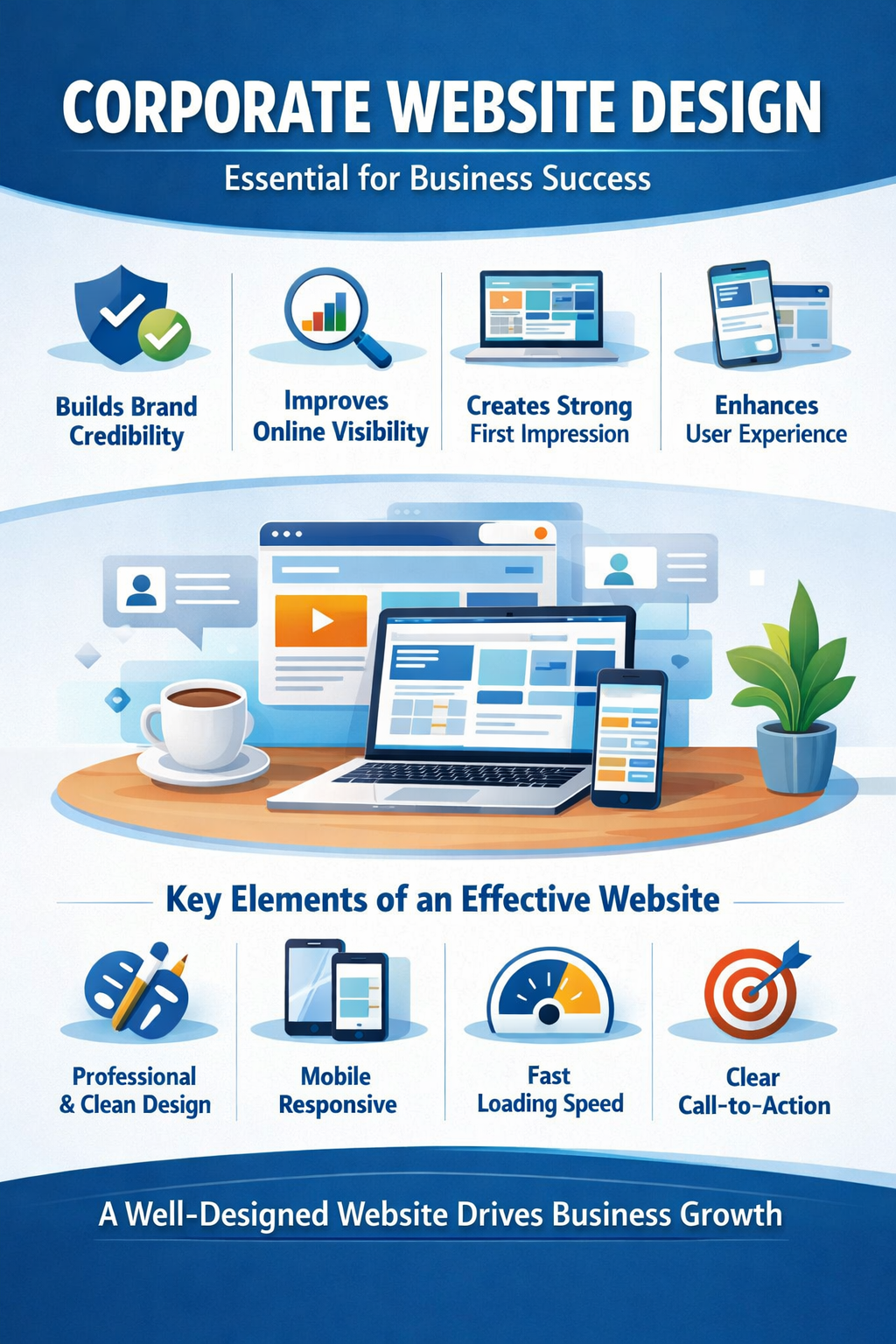
When we look at a website or app, we decide if we like it in a few seconds. If the design is confusing or slow, we just leave. That is why UI/UX Design is so important for any product that wants to be successful. These days, businesses know that just making something look nice is not enough. The design also has to be easy to use and make sense to the people using it. This is where UI and UX design come in. UI/UX Design is about making digital products that people like to use. In this article, we will talk about what UI/UX Design is, why it is important and how it can help make users happy and businesses successful.   What Is UI/UX Design? UI/UX Design is the process of making interfaces that are nice to look at and easy to use. UI Design is about things like buttons, colours, and how things are laid out. UX Design is about how people interact with a product and how it makes them feel. Together, UI and UX make sure that users can use a website, app or software without getting confused. When UI/UX Design is done right, it creates an experience that keeps users happy and engaged.   Why UI/UX Design Is Important for Modern Websites A good design can make a difference in how users interact with a digital product. Businesses that invest in UI/UX Design usually see more people using their products, higher sales and happier customers. Some good things about UI/UX Design include: Better user engagement Lower bounce rates Higher conversion rates Stronger brand trust Increased customer retention When users find a website easy to use, they are more likely to stay and take action.   Key Elements of Effective UI/UX Design To create a great user experience, you need creativity, research and clear design principles. Here are some important elements that make UI/UX Design effective. 1. User-Centred Design You have to understand what users need and want before you start designing. This way, you can create something that actually helps them. 2. Clear Navigation Users should never feel lost on a website. Menus, logical page structure and simple navigation help users move through the site easily. 3. Consistent Visual Design Using the same fonts, colours, and layouts across the website makes the design look professional and trustworthy. 4. Fast Loading Speed If a website is slow, users usually leave. A fast-loading website improves the user experience and keeps visitors engaged.   How UI/UX Design Improves Business Growth Today, businesses compete heavily online. If your product does not look good or is difficult to use, users will move to competitors. UI/UX Design can help businesses by: Increasing website conversions Improving customer satisfaction Strengthening brand image Encouraging users to return Increasing sales When users enjoy the experience, they are more likely to trust the brand and come back again.   UI vs UX: Understanding the Difference Many people confuse UI and UX design, but they are different. UI Design focuses on how things look. UX Design focuses on how things work. UI design includes colours, typography and icons, while UX design focuses on usability and interaction. Both are essential for creating successful digital products.   Best Practices for UI/UX Design Designers follow certain principles to create effective interfaces. Some best practices include: Keeping the design simple Designing for mobile first Using clear and visible buttons Testing usability regularly Making designs accessible for everyone Following these practices helps create a product that is easy to use and performs well.   The Future of UI/UX Design Technology is evolving quickly, and UI/UX Design is evolving with it. Some emerging trends include: AI-driven design Voice user interfaces Micro-interactions and animations Dark mode design Personalised user experiences Designers who stay updated with these trends can create more engaging and innovative digital products.   Conclusion In today’s digital world, UI/UX Design is something businesses cannot ignore. It plays a major role in how users see and interact with a product. If you create something that is easy to use, visually appealing and meaningful, you can deliver a better digital experience. Businesses that invest in UI/UX Design can build stronger relationships with their users and achieve long-term success.

Ecommerce Website Design: Why It Matters for Online Store Success
Categories
Marketing, SEO

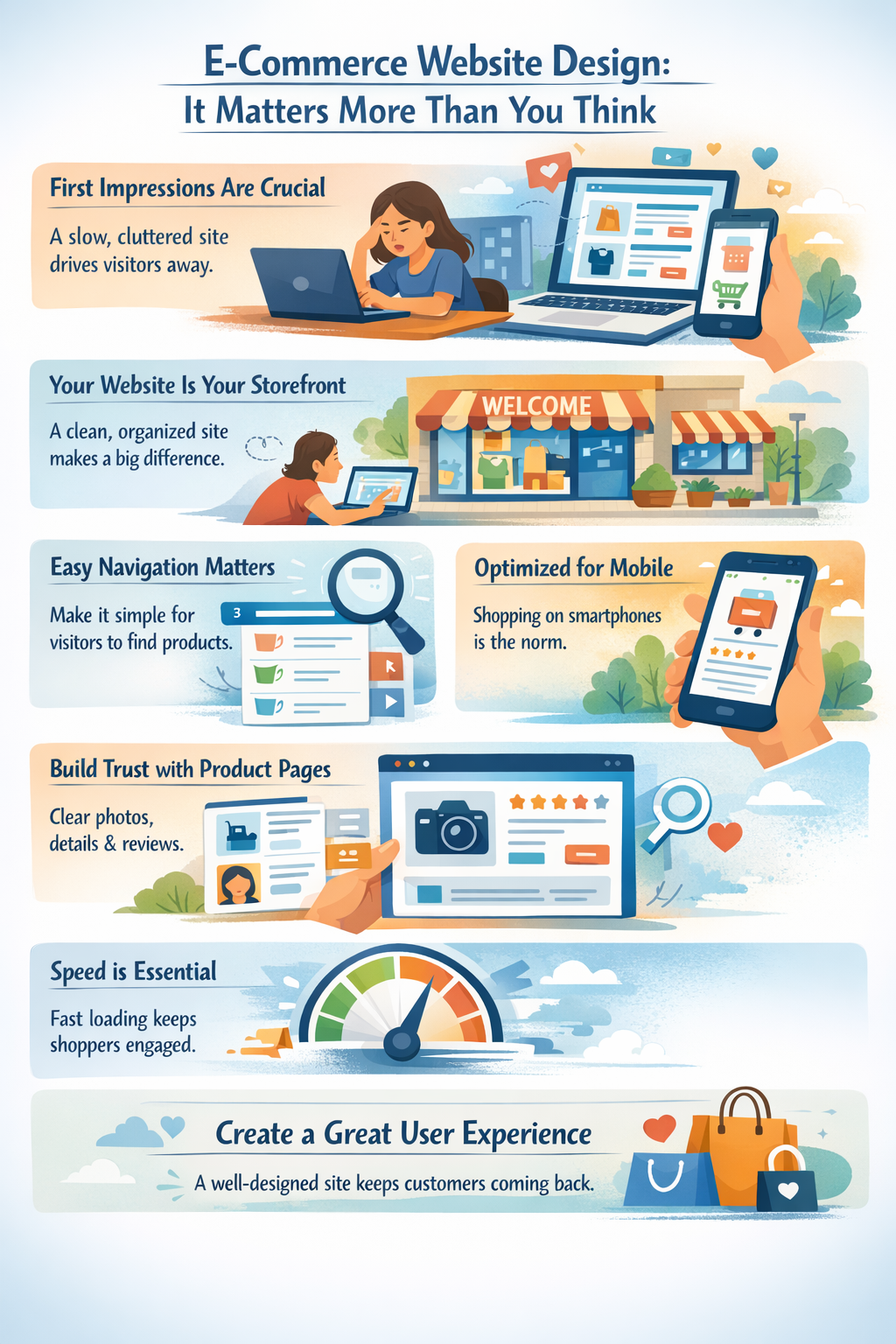
E-commerce Website Design: It Matters More Than You Think When people start a business, they usually think about marketing first. They talk about SEO, paid ads and growing followers on media. These things are important. There is something else that plays a huge role in whether an online store does well or not. The design of the e-commerce website itself. Website Design Is More Than Just Looks A lot of business owners think that website design is about how it looks. They think about colours, fonts and animations that make the site look modern. These things are just a small part of what really matters. Good e-commerce website design is about how people experience the site. If a website is easy to use and feels smooth, visitors will. Explore.. If the site is confusing, slow or cluttered, people will leave and try another store. First Impressions Happen Quickly First impressions happen quickly. Think about the time you opened a website that took forever to load. You probably did not wait for it to finish loading. You closed the tab. Moved on to the next result. Online shoppers do the thing. When someone lands on your e-commerce website for the first time, they start forming an opinion right away. The layout, images, loading speed and navigation all play a part in that impression. People make these judgments quickly. A clean and well-organised e-commerce website can make a brand feel trustworthy and professional. On the other hand, a messy or outdated site can create doubt even if the products are great. Sometimes small design choices influence customers more than we realise. Your E-commerce Website Is Your Storefront Your e-commerce website is basically your store. Imagine walking into a store. If the place is messy and products are scattered everywhere, you probably will not stay long. Now, picture the situation. You enter a store that feels organised and welcoming. Products are arranged neatly signs help you find what you need. Everything feels simple to navigate. Online stores work in a way. Your e-commerce website is the version of your storefront. For customers, it is their first interaction with your brand. So the way your website looks and functions can strongly influence how people see your business. A thought-out ecommerce website design makes visitors feel comfortable enough to stay and explore. Make It Simple for Visitors to Find Products Make it simple for visitors to find products. One mistake many websites make is trying to show too much at once. Menus become crowded, categories overlap, and the search bar becomes hard to locate. When this happens, visitors often feel lost. People do not come to a store to learn how the website works. They come to find a product and decide whether they want to buy it. That is why clear navigation is so important. Simple menus, organised categories and an easy-to-find search option make browsing much easier. When visitors do not have to struggle to find what they are looking for, they are more likely to continue exploring the store. The longer someone stays on your site, the higher the chance they will eventually make a purchase. Mobile Shopping Is Now the Norm Mobile shopping is now the norm. Over the past few years, the way people shop online has changed. A huge number of customers now browse stores directly from their smartphones. Because of this, having a friendly e-commerce website is no longer optional. Buttons should be easy to tap text should be readable without zooming in. Images should adjust properly to smaller screens. As importantly, the website should load quickly on mobile networks. If a site works well on a laptop but feels slow or awkward on a phone, many visitors will leave before looking at the products. Product Pages Should Build Trust Product pages should build trust. A good product page does more than just display an item. It helps customers feel confident about what they’re buying. Clear images allow visitors to see the product properly. Detailed descriptions explain what the product does and how it might be useful. Specifications provide the extra details shoppers often look for before making a decision. When this information is presented clearly, customers feel more comfortable moving forward with the purchase. A good e-commerce website design makes sure product information is easy to read and organised in a way that does not overwhelm visitors. Website Speed Is Often Overlooked Website speed is often overlooked. From a customer’s perspective, it makes a big difference. If a page takes a long time to load, people quickly lose patience. Of waiting, they often go back and choose another website that loads faster. Fast websites create a smoother browsing experience. Pages open quickly images appear without delay. Customers can move between products without frustration. In ways, speed is an invisible part of e-commerce website design, but it has a huge impact on how people feel while using your site. Small Details Help Build Trust Small details help build trust. In a store, customers can ask questions or speak with staff before buying something. Online stores do not have that advantage. Because of that, the e-commerce website itself needs to build trust. Customer reviews, secure payment icons, clear return policies and visible contact information all help reassure visitors that the store is legitimate. Even simple design choices. Like a layout or consistent branding. Can influence how trustworthy a website feels. A designed ecommerce website quietly communicates professionalism. Final Thoughts Final thoughts: Successful online stores focus on creating an experience for their visitors. People should be able to browse products, understand what they are buying and complete the checkout process without frustration. When everything feels smooth and simple, visitors are more likely to stay and, more importantly, return again in the future. That is why investing in an e-commerce website design is not just about making a site look attractive. It is really about creating an experience that makes customers feel comfortable enough to come to your e-commerce website.

Local SEO Feels Different Now — And Most Businesses Can Sense It
Categories
SEO

Local SEO has started to feel different for many businesses. If you talk to any local business owner right now, there’s this quiet sense that something has shifted. The usual advice — get reviews, update your listing, publish content — still matters, but somehow it doesn’t explain everything anymore. So the conversation around local SEO is slowly changing. It’s less about chasing positions and more about making sure your business makes sense wherever it shows up.   It’s Not Just Search Results — It’s How People Ask Think about how someone looks for a service when they’re in a hurry. They don’t think in keywords. They think in problems. They might ask something like, “Is there a reliable electrician nearby who can come today?” That’s a very different kind of query compared to the old “electrician near me.” Search systems now try to interpret intent first. They look for signals that feel trustworthy and clear. If your online presence is scattered — slightly different descriptions here, outdated info there — it becomes harder to connect the dots. And when systems can’t connect the dots, they simply move on. How Your Business Gets Understood Online There isn’t one place that defines you. It’s more like a trail of breadcrumbs across the internet. A review mentioning a neighbourhood. A directory listing with your services. A blog post where you explain how you solve a common problem. Maybe even a local mention somewhere you forgot about. Taken together, these small pieces form an impression. Over time, that impression either becomes clear or fuzzy. Clarity tends to win. The Basics Still Matter — Maybe More Than Before It might sound boring, but accurate information still carries a lot of weight. Keeping your details consistent, replying to customers, and maintaining a helpful website are simple things that quietly build confidence. What’s changed is that small inconsistencies stand out more now. Something as simple as slightly different business hours across platforms can create doubt. And doubt rarely helps visibility. What Seems To Help In Practice Talk About What You Actually See Day To Day Generic content is easy to spot. When you write about real situations — the kinds of questions customers ask or issues common in your area — it feels grounded. That authenticity travels further than you might expect.   Keep Your Language Simple You don’t need to sound like a textbook. Clear explanations are usually more effective than perfect wording. Most people just want to understand quickly. Let Trust Build Naturally Photos of real work, honest reviews, clear explanations — these things don’t feel like “optimisation,” but they help people (and systems) understand who you are. Check How You Appear Across The Web Sometimes businesses don’t realise how many versions of their information exist online. Taking the time to align them can make a noticeable difference over time. Answer Questions Before They’re Asked If you notice customers asking the same things repeatedly — costs, timelines, what to expect — those are good topics to address openly. It saves time for everyone. Looking At Progress A Bit Differently Instead of only watching rankings, it can help to notice other signs. Are more people mentioning your name directly? Are enquiries becoming more specific? Do customers seem to arrive with more context? These subtle signals often show that your presence is becoming clearer. Maybe The Biggest Change Is Mindset Local SEO used to feel like a checklist. Now it feels more like communication. The businesses that do well tend to be the ones that explain what they do clearly and show up consistently. There’s no single trick. Just steady signals over time. And in many ways, that’s reassuring — because clarity is something every business can work on.

India’s Leading Web Design Solutions for Business Growth.
Categories
SEO

Web Design Services in India – Building Digital Experiences That Work Over the past decade, India has emerged as one of the world’s most dynamic digital markets. Today, every business—from local homegrown brands to global enterprises—understands that a website is no longer “something nice to have.” It is often the first conversation between a company and its audience, and in many cases, the deciding factor behind sales, credibility, and trust. This is why web design services in India are constantly evolving, blending creativity, usability, and technology to deliver meaningful digital experiences.     Mobile-First Design for a Mobile-First Nation India’s digital landscape is shaped by smartphones. Millions of users browse, shop, pay bills, and interact with brands on mobile devices daily. With such diverse users and screen sizes, modern Indian web design companies now start with a mobile-first mindset. A strong mobile-ready website: Loads quickly, even on weaker networks Adjusts smoothly across screens Lets users perform actions easily—click, scroll, pay, read A responsive site not only makes navigation simpler; it also signals professionalism and increases conversions. For startups and small businesses, this often becomes the most effective digital investment. User-Centric Layouts and Crystal-Clear Messaging A visually attractive website alone isn’t enough. The strongest-performing Indian websites are built around what the user wants, not what the brand wants to show. Modern design teams in India focus on: Clean layouts Straightforward messaging Predictable paths to navigation Clear brand voice Too much clutter frustrates users and pushes them away, especially when they are ready to buy or enquire. Websites that communicate who they are, what they offer, and how to get it—without confusion—tend to hold attention longer and convert better. Speed, Performance, and Robust Tech Build Website visitors today are impatient. If a page takes too long to load, they close the tab and move on to a competitor. Design agencies in India understand this reality and build websites with performance in mind—compressed imagery, clean coding practices, efficient hosting, and optimised frameworks. A fast website doesn’t just help with user satisfaction; it also signals quality to search engines, boosting search visibility naturally. Built for SEO from Day One A website is only as useful as the traffic it attracts. That’s why many Indian businesses rely on web designers who understand search engine fundamentals—how pages are structured, how content flows, and how Google crawls a site. Good design places attention on: Logical URL and site architecture Headline hierarchy Internal linking Proper on-page SEO blocks Schema and metadata planning When SEO is woven into the design process instead of being added later, websites gain better organic visibility and reduce reliance on ads. Conversion-Ready Pages That Drive Real Results Whether the goal is booking appointments, generating leads, or selling products, design matters. Indian web design companies are increasingly adopting data-backed strategies—placing call-to-action buttons where users expect them, designing enquiry forms that are easy to submit, and adding trust signals like testimonials, reviews, and social proof. A website that merely looks good may impress a visitor, but a website that converts them into customers pays for itself many times over. Visual Storytelling Backed by Content Modern website design goes beyond layouts and colour schemes. Brands are discovering that photographs, videos, illustrations, and micro-animations can communicate emotions far faster than paragraphs of text. But the role of design is not to overshadow content—it’s to support and enhance it. Thoughtful web design balances visuals with meaningful copywriting, allowing brands to narrate their story, display expertise, and connect with users on a personal level. Secure, Scalable, and Built for Tomorrow The Indian market moves fast—and digital expectations change just as quickly. A future-ready website should be able to grow with the business—whether that means adding eCommerce, integrating chat support, building user dashboards, or connecting with CRM and automation tools. Security is equally essential. SSL certificates, data protection, clean coding, and regular maintenance tell customers that their interactions with the brand are safe. Conclusion Web design in India is no longer limited to creating a beautiful homepage. It has become a strategic business service that blends creativity, usability, and technology to help brands stand out in a crowded market. Businesses of all sizes now understand: A website shapes first impressions. A website builds trust. A website generates leads and revenue. Choosing the right team—not just the cheapest one—can make the difference between a website that exists and a website that performs. And in a digital age where attention is fleeting and competition is everywhere, performance is the only thing that matters.

Localised SEO for LLMs: A New Framework for Local Visibility in AI-Driven Search
Categories
SEO

Localised SEO is undergoing a fundamental transformation. The rise of large language models (LLMs) such as ChatGPT, Perplexity, and AI-powered search experiences has changed how people discover local businesses. Instead of scanning lists of websites or map results, users are increasingly receiving direct answers generated by AI systems. For local brands, this shift means visibility is no longer driven by rankings alone—it is driven by understanding, trust, and contextual clarity. This article explores how localised SEO has evolved in the age of LLMs, why traditional tactics still matter, and what businesses must do to remain visible in AI-generated local answers. Why AI Is Reshaping Local Search Traditional local SEO focuses on proximity, relevance, and prominence. Search engines display map packs, directories, and organic listings, allowing users to compare options. LLMs work differently. They synthesise information and produce a single response based on the strongest and clearest signals available across the web. When a user asks an AI tool for a nearby service—such as a mechanic, dentist, or contractor—the model evaluates which businesses it can confidently associate with that request. If a brand’s online presence is unclear, inconsistent, or poorly structured, the AI may ignore it entirely, even if it performs well in standard search results. This matters because AI-generated answers often appear before traditional listings and, in many cases, replace them altogether. How LLMs Determine Local Relevance LLMs do not rely heavily on real-time location signals like GPS. Instead, they infer local relevance from language patterns, structured data, and repeated associations found across digital sources. Common signals include: Customer reviews that mention neighbourhoods, landmarks, or service areas Structured data that defines business type, address, and coverage areas Mentions across directories, social platforms, and local media Website content that addresses location-specific questions If a business repeatedly appears in connection with a particular city or district, AI systems learn that association. When these signals are weak or contradictory, the model becomes uncertain—and uncertainty usually leads to exclusion. The Continued Importance of Traditional Local SEO Despite the rise of AI-driven discovery, foundational local SEO remains essential. Accurate listings, consistent NAP details, customer reviews, and on-site optimization still provide the raw data AI systems depend on. What has changed is the tolerance for inconsistency. Even small discrepancies across platforms can reduce AI confidence. A mismatch in business hours, descriptions, or service areas may not severely impact rankings, but it can prevent inclusion in AI-generated responses. In today’s environment, local SEO provides the structure, while AI determines amplification. Best Practices for Localised SEO in the LLM Era 1. Build Content Around Real Local Context Generic city pages no longer provide enough depth. AI systems favour businesses that demonstrate a genuine understanding of the communities they serve. Effective localised content reflects: Neighbourhood-level challenges Regional climate or seasonal factors Local regulations or processes Area-specific customer concerns When content feels grounded in real-world local experience, LLMs are better able to match it to user intent. 2. Write in Natural, Question-Based Language LLMs process conversational language exceptionally well. Content should mirror how people actually ask questions. Use clear headings, short sections, and FAQ-style formats. Answer full questions instead of relying on fragmented keywords. This approach improves readability for users and extractability for AI systems. 3. Strengthen Trust and Credibility Signals AI systems assess trust in ways similar to human readers. They look for evidence that a business is experienced, knowledgeable, and reliable. Strong credibility signals include: Real examples tied to specific locations Expert insights from staff or leadership Clear author attribution and credentials Community involvement or partnerships Reviews that describe detailed outcomes When these signals appear consistently, AI models are more likely to recommend the business. 4. Use Structured Data to Define Your Entity Schema markup helps remove ambiguity. Clearly defining your business as a distinct entity—with accurate location, service area, and service attributes—gives AI systems a reliable reference point. Complete and accurate structured data increases confidence and reduces the chance of misinformation appearing in AI-generated responses. 5. Standardize Your Digital Presence Everywhere LLMs evaluate the entire digital footprint of a business, not just its website. Consistency across directories, maps, social profiles, and review platforms is critical. Even subtle differences in wording or formatting can introduce doubt. Consistency signals stability, and stability signals authority. 6. Use AI-Friendly Content Formats Certain formats translate especially well into AI-generated answers, including: Local comparison guides Cost explanations Area-specific FAQs Step-by-step service explainers These formats align with how AI summarises information and how users seek answers. 7. Maintain Logical Internal Linking Internal links help establish topical relationships. Linking service pages to location pages and related blog content clarifies subject relevance and authority. AI systems benefit from this structure when interpreting expertise and scope. Measuring Success Beyond Rankings Traditional keyword rankings still matter, but they no longer reflect the full picture. To evaluate AI visibility, businesses should monitor: Growth in branded searches Search impressions rather than clicks Mentions in AI tools and summaries Unlinked brand references Review trends and language patterns As zero-click search experiences expand, these indicators become more valuable than rankings alone. Final Thoughts Localized SEO for LLMs is not a replacement for traditional local SEO—it is an evolution of it. Businesses that focus on clarity, consistency, and real local relevance are better positioned to appear in AI-generated answers. By strengthening entity signals, refining structured data, and creating content rooted in local reality, brands can improve visibility across search engines, map results, and AI-powered discovery platforms. In an AI-driven search landscape, being clearly understood is just as important as being well-ranked.

Calendar

April 2026
M T W T F S S
 12345
6789101112
13141516171819
20212223242526
27282930  

Categories