Best Digital Marketing Agency: Why G-Ranking Expert Is the Ultimate Growth Partner
Categories
Digital Marketing

In today’s hyper-connected business environment, having a website or social media presence is no longer enough to establish a successful brand. Consumers expect businesses to be visible, credible, and engaging across multiple digital platforms before making a purchasing decision. This is why choosing the Best Digital Marketing Agency has become one of the most important investments for businesses aiming to achieve sustainable growth. G-Ranking Expert has emerged as a trusted name in the digital marketing industry by helping businesses increase online visibility, attract high-quality leads, and maximise return on investment. Through strategic planning, innovative marketing techniques, and data-driven execution, the agency empowers brands to build a strong digital presence that delivers measurable results. Why Every Business Needs Digital Marketing The way customers discover products and services has changed dramatically. Most buying journeys now begin with an online search, social media interaction, or customer review. Businesses that fail to establish a strong digital presence often lose valuable opportunities to competitors who invest in professional marketing strategies. Digital marketing goes beyond simply promoting products or services. It creates meaningful customer relationships, strengthens brand authority, improves search engine visibility, and drives consistent business growth. A professional agency understands how to combine these elements into a comprehensive strategy that delivers long-term success instead of temporary results. With the right digital marketing partner, businesses can generate targeted traffic, improve conversion rates, and create a competitive advantage in today’s rapidly evolving marketplace. Why G-Ranking Expert Is the Best Digital Marketing Agency G-Ranking Expert believes that successful marketing begins with understanding the unique goals of every business. Instead of offering generic marketing packages, the agency develops customised digital strategies tailored to each client’s industry, target audience, and growth objectives. Every campaign is built upon extensive market research, competitor analysis, keyword planning, and customer behaviour insights. This strategic foundation allows businesses to invest their marketing budget more efficiently while achieving higher returns. Whether working with startups, local businesses, eCommerce stores, or established enterprises, G-Ranking Expert delivers scalable digital marketing solutions designed to support sustainable business expansion. Comprehensive Digital Marketing Services One of the biggest advantages of partnering with G-Ranking Expert is access to a complete range of digital marketing services under one roof. This integrated approach ensures every aspect of a business’s online presence works together to maximise performance. The agency offers: Search Engine Optimisation (SEO) Local SEO Google Ads (Pay-Per-Click Advertising) Social Media Marketing Website Design and Development Shopify Store Development Content Marketing Conversion Rate Optimisation Brand Strategy Online Reputation Management Each service is carefully designed to complement the others, creating a unified marketing strategy that increases visibility, generates qualified leads, and improves customer engagement. Data-Driven Strategies That Deliver Results One of the defining characteristics of G-Ranking Expert is its commitment to measurable performance. Every marketing decision is supported by data rather than assumptions. The agency continuously analyses website traffic, keyword rankings, customer behaviour, campaign performance, and conversion metrics to identify opportunities for improvement. This ongoing optimisation ensures marketing campaigns remain effective as market trends and customer preferences evolve. Instead of focusing only on impressions or clicks, G-Ranking Expert prioritises business outcomes such as lead generation, customer acquisition, sales growth, and return on investment. Clients receive transparent reports that clearly demonstrate campaign performance and highlight actionable insights for future growth. SEO Excellence for Long-Term Success Search Engine Optimisation remains one of the most valuable digital marketing investments for businesses seeking sustainable growth. Unlike paid advertising, SEO continues delivering value long after the initial optimisation process. G-Ranking Expert follows ethical, search-engine-approved SEO practices that include technical optimisation, keyword research, on-page SEO, content optimisation, high-quality link building, local SEO, and performance monitoring. This comprehensive SEO strategy helps businesses improve search rankings, increase organic traffic, enhance user experience, and establish long-term authority within their industries. Customer-Centric Marketing Approach Every successful marketing campaign begins with understanding the customer. G-Ranking Expert focuses on identifying customer needs, preferences, search intent, and purchasing behaviour before developing marketing strategies. This customer-first philosophy enables businesses to create meaningful connections with their audience while improving engagement and conversion rates. By delivering personalised digital experiences across search engines, websites, and social media platforms, the agency helps brands build trust and long-lasting customer relationships. Beyond execution, G-Ranking Expert works as a strategic growth partner by offering continuous consultation, performance reviews, and marketing recommendations that help businesses adapt to changing digital trends. This commitment to innovation and client success makes the agency a reliable choice for organisations looking to strengthen their competitive position in the digital marketplace.

SEO: The Foundation of Sustainable Digital Growth
Categories
SEO

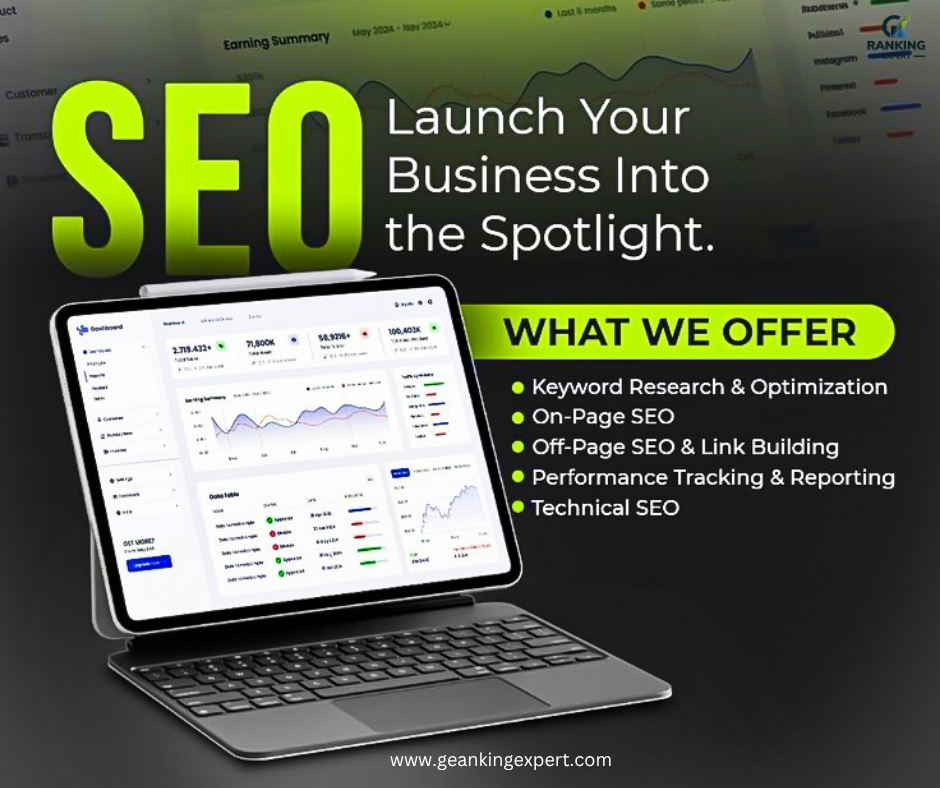
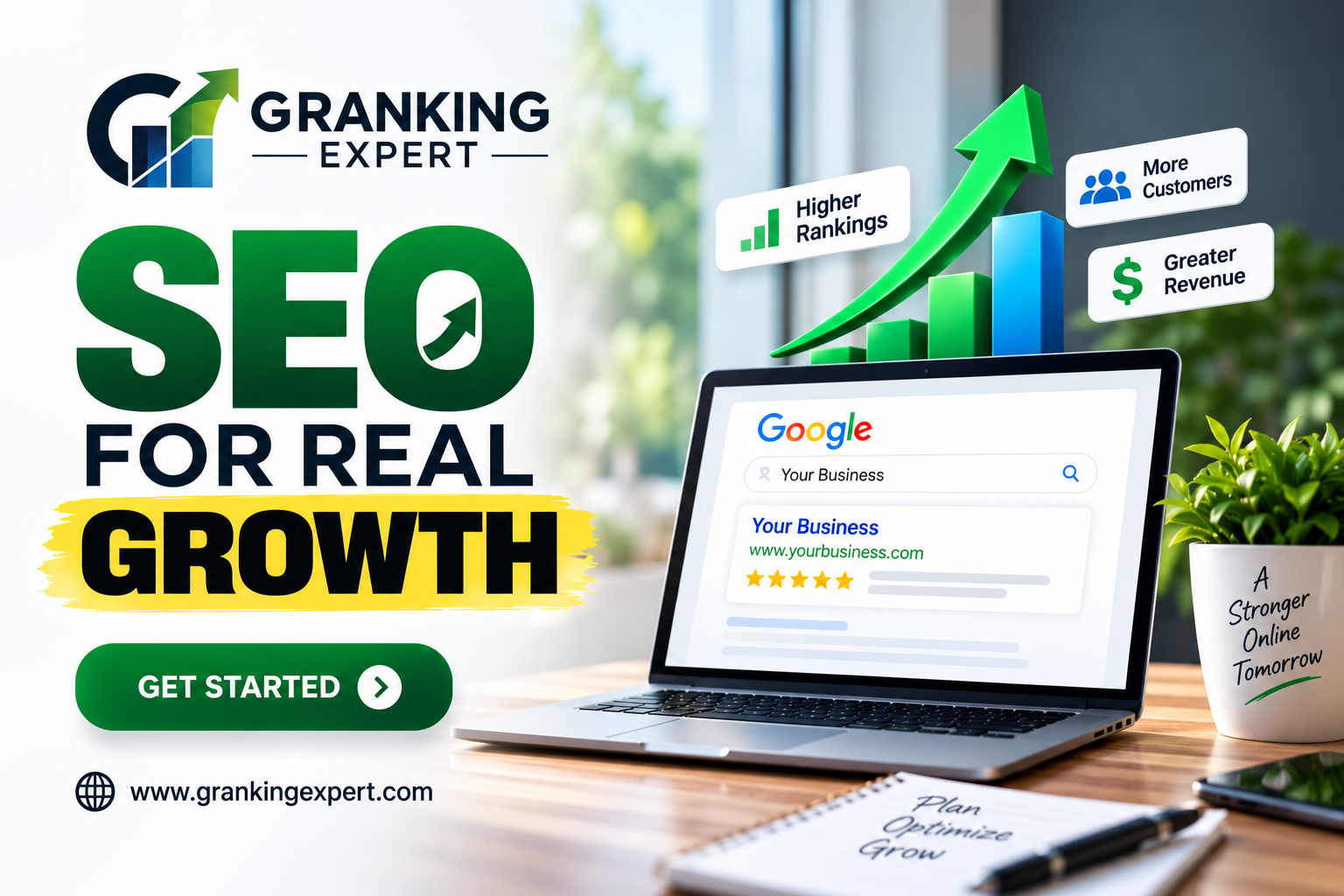
In today’s competitive digital marketplace, having a website alone is no longer enough to attract customers or grow a business. Millions of websites compete for attention every day, making online visibility one of the most valuable assets for any brand. This is where Search Engine Optimisation (SEO) becomes an essential part of a successful digital marketing strategy. SEO is the process of optimising a website so that it ranks higher on search engines like Google, allowing businesses to reach users who are actively searching for their products or services. Unlike paid advertising, SEO focuses on generating consistent organic traffic that continues delivering results over the long term. Whether you operate a local business, an eCommerce store, or a multinational company, investing in SEO helps strengthen your online presence, improve customer trust, and create sustainable business growth. Why SEO Matters for Every Business Search engines have become the primary source of information for consumers. Before purchasing a product, booking a service, or choosing a company, most users begin with an online search. If your website does not appear among the top search results, potential customers are likely to choose a competitor instead. SEO helps bridge this gap by improving your website’s visibility and making it easier for search engines to understand your content. A strong SEO strategy not only attracts more visitors but also brings highly targeted traffic. These users are already interested in what your business offers, increasing the likelihood of conversions. Higher search rankings also build credibility because users naturally trust websites that appear on the first page of search results. Over time, consistent SEO efforts establish your brand as an industry authority while reducing dependence on expensive advertising campaigns. The Essential Components of Effective SEO Successful SEO involves multiple strategies working together to improve both user experience and search engine performance. Keyword research forms the foundation of every optimization campaign by identifying the search terms your audience uses most frequently. These keywords are then integrated naturally into website content, headings, meta descriptions, and URLs. On-page SEO focuses on optimising individual web pages through high-quality content, internal linking, image optimisation, and proper heading structures. Technical SEO ensures that websites load quickly, function smoothly on mobile devices, maintain secure HTTPS connections, and can be easily crawled by search engine bots. Off-page SEO strengthens a website’s authority through quality backlinks earned from reputable websites. Content marketing also plays a significant role in SEO success. Publishing informative blogs, detailed guides, and valuable resources helps answer users’ questions while encouraging longer visit durations and repeat traffic. Together, these elements create a comprehensive SEO strategy that improves visibility and delivers measurable business results. Benefits of Investing in SEO SEO provides long-term advantages that extend far beyond higher search rankings. One of its greatest strengths is the ability to generate sustainable organic traffic without ongoing advertising expenses. Unlike paid campaigns that stop producing results once budgets are exhausted, SEO continues attracting visitors through well-optimised content. Another major benefit is improved user experience. Fast-loading pages, mobile responsiveness, easy navigation, and relevant content all contribute to higher engagement and lower bounce rates. Search engines reward websites that provide positive user experiences with better rankings. SEO also enhances brand awareness and customer confidence. Appearing consistently in search results increases recognition and positions your business as a reliable source of information. Businesses with strong SEO strategies often experience increased lead generation, higher conversion rates, stronger local visibility, and improved return on investment. These long-term benefits make SEO one of the most cost-effective digital marketing strategies available today. Common SEO Mistakes to Avoid Many businesses fail to achieve desired SEO results because they overlook fundamental optimisation practices. One of the most common mistakes is creating low-quality or duplicated content. Search engines prioritise originality, relevance, and value, making unique content essential for long-term success. Keyword stuffing is another outdated practice that can negatively affect rankings. Instead of repeating keywords excessively, content should read naturally while providing useful information. Ignoring technical issues such as broken links, slow loading speeds, poor mobile optimisation, and missing meta tags can also limit search performance. Businesses should avoid neglecting regular content updates, as outdated information reduces both user trust and search engine relevance. SEO is not a one-time project but an ongoing process that requires continuous monitoring, improvement, and adaptation to evolving search engine algorithms. Building Long-Term Success Through SEO SEO remains one of the most powerful investments a business can make for long-term digital success. It combines technical excellence, valuable content, strategic keyword optimisation, and exceptional user experience to improve search visibility and attract qualified visitors. As search engines continue evolving, businesses that prioritise ethical and user-focused SEO strategies will maintain a competitive advantage in their industries. Whether your objective is increasing website traffic, generating qualified leads, strengthening local presence, or expanding into new markets, SEO provides a scalable and sustainable path toward achieving those goals. By consistently publishing valuable content, optimising website performance, and following search engine best practices, businesses can build lasting online authority and enjoy continued growth. In an increasingly competitive online world, SEO is not simply an option—it is a necessity for organisations that want to thrive and remain visible to their target audience for years to come.

Search Engine Optimisation: Getting Your Website Noticed
Categories
SEO

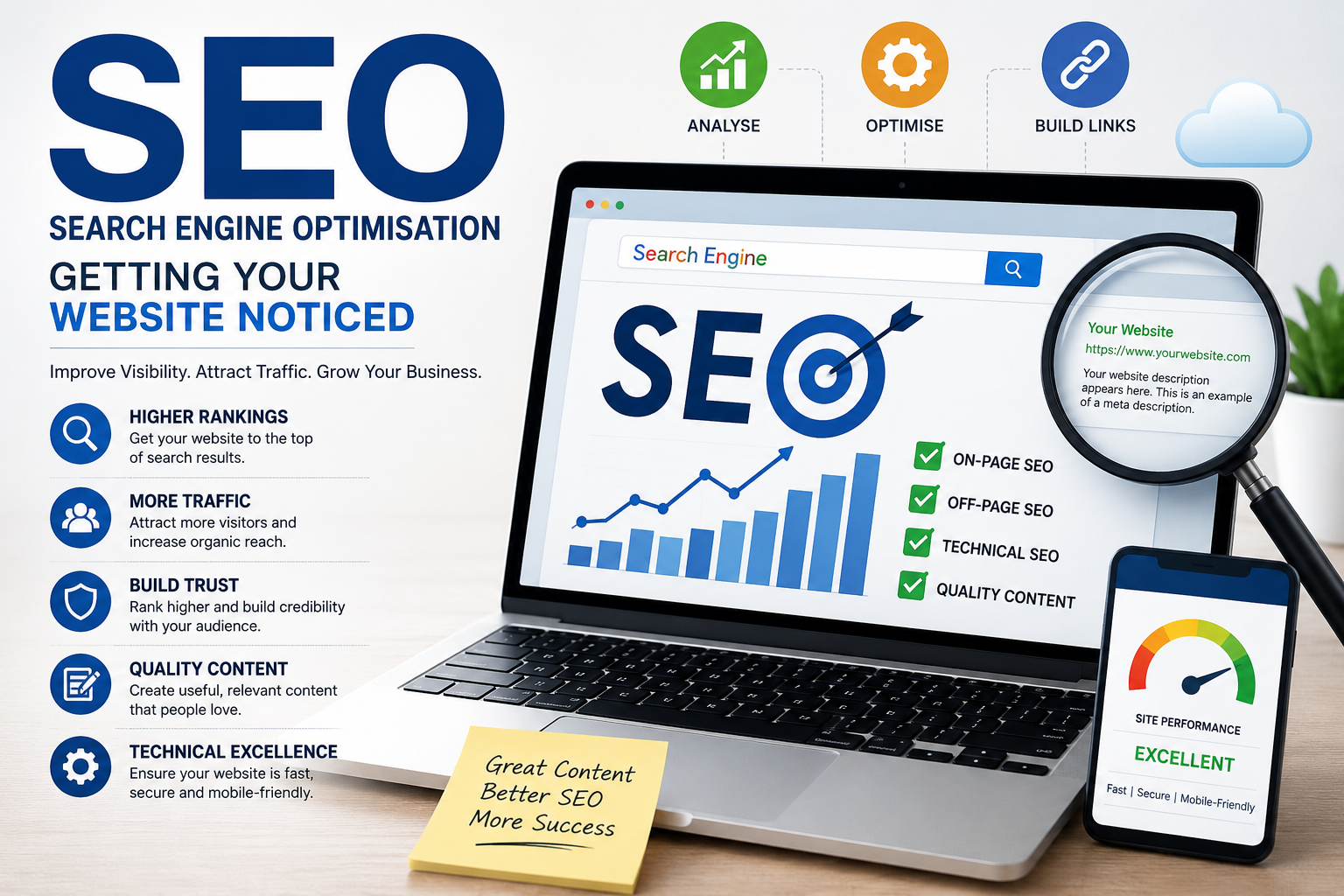
These days, people use search engines to find everything they need. If your website is not visible in search results, it is as if it does not exist. You can have a website with amazing products and information, but if people cannot find it, what is the point? This is where Search Engine Optimisation comes in. Search Engine Optimisation is the process of making your website show up near the top of search engine results. This way, when people search for something, they are more likely to see your website. It involves making some changes to your website and creating content that search engines like. As more and more businesses go online, Search Engine Optimisation has become very important. Why Search Engine Optimisation Matters When people want to find something, they usually start by searching for it. Whether they are looking for information comparing products or trying to find a business, search engines are the first place they go. If your website shows up near the top of the search results, more people will see it. Visit it. One of the things about Search Engine Optimisation is that it can bring people to your website without you having to pay for ads. If you do it right, your website can keep showing up in search results for a time. This makes Search Engine Optimisation a cost-effective way to market your business. When your website shows up near the top of search results, people are more likely to trust it. They think that if a website is near the top, it must be good and reliable. So Search Engine Optimisation can help make your business look more credible and trustworthy. What Makes a Good Search Engine Optimisation Strategy There are three parts to a good Search Engine Optimisation strategy: on-page optimisation, off-page optimisation and technical optimisation. On-page optimisation is about making your website’s content and structure better. This includes finding the keywords, writing good descriptions and creating content that people will want to read. You want to make sure that both people and search engines can understand what your website is about. Off-page optimisation is about getting websites to link to yours. When a reputable website links to yours, it is like a vote of confidence. Search engines see this. Think that your website must be good. You can also use media and other online platforms to promote your website. Technical optimisation is about making sure your website works well and is easy for search engines to access. This includes things like making your website load quickly, making sure it works well on devices and using security protocols. If your website is slow or hard to use, people will not stay on it for long. The Importance of Good Content Content is a part of any Search Engine Optimisation strategy. Search engines want to show people the relevant and useful information they can find. If your website has content, it is more likely to show up near the top of search results. Good content is not about using the right keywords. It is about creating something that’s useful and interesting to people. You want to answer their questions, solve their problems, and give them something they will want to share with others. When you create content, people are more likely to stay on your website and come back to it. They are also more likely to link to it from their websites, which helps your Search Engine Optimisation. Good content is essential for building trust and credibility with your audience. The Future of Search Engine Optimisation Search Engine Optimisation is always changing. New technologies and trends are emerging all the time. Businesses need to stay on top of them. Now things like voice search, artificial intelligence and mobile-first indexing are becoming more important. More and more people are using voice search to find what they need online. This means that businesses need to optimise their content for voice search using conversational language and answering questions directly. Artificial intelligence is also becoming more sophisticated. It can help search engines understand what people are looking for. Mobile optimisation is no longer optional. Most people access the internet through their devices, so businesses need to make sure their websites work well on these devices. This means having fast-loading pages, responsive designs and easy-to-use interfaces. Conclusion Search Engine Optimisation is not about getting your website to show up near the top of search results. It is about creating an online presence, giving people what they are looking for and building trust and credibility with your audience. By focusing on content, technical excellence and the latest trends, businesses can stay ahead of the competition and achieve long-term success online.

Shopify Web Development: The Foundation of a Successful Online Store
Categories
Sales, Digital Marketing

Introduction The e-commerce industry is growing fast. This makes it very important for businesses to have an online presence. Whether you are a startup launching your product or an established company expanding into new markets, having a professional online store is crucial for success. Among the e-commerce platforms available today, Shopify has become a leading choice for businesses worldwide. This is because of its flexibility, reliability and user-friendly features. Shopify web development is more than creating an online store. It involves building a secure and engaging shopping experience. This helps businesses attract customers, increase conversions and strengthen their brand identity. With the development strategy, Shopify can become a powerful tool for long-term business growth. Why Shopify is a Preferred eCommerce Platform Shopify is an e-commerce platform. It simplifies the process of running a business. The dashboard is easy to use. It allows store owners to manage products, track inventory, process orders and monitor sales. You do not need technical knowledge to use it. Shopify is also scalable. It supports businesses at every stage of growth. This includes online stores and large enterprises handling thousands of transactions daily. As your business expands, the platform can accommodate increasing traffic and product catalogues. It does this without compromising performance. Security is another reason businesses choose Shopify. The platform provides SSL certification. It also offers payment processing and regular updates. These ensure customer data remains protected. The platform also offers responsive designs and reliable hosting. This makes Shopify a complete solution for online retailers. The Importance of Professional Shopify Web Development Shopify offers made themes and built-in features. However, professional web development can significantly improve the performance and effectiveness of a store. A developed Shopify website is designed to look attractive. It also provides a user experience. This encourages visitors to become customers. Professional developers customise themes. They match a brand’s identity. This ensures consistency across every page. They also optimise website speed, navigation and functionality. These are factors in customer satisfaction and conversion rates. Shopify developers can integrate third-party tools. These include CRM systems, marketing platforms, payment gateways and inventory management software. These integrations streamline business operations. They create an efficient workflow. A developed Shopify store follows SEO best practices. This helps businesses achieve visibility in search engine results. Improved rankings lead to increased traffic. This can generate sales without relying solely on paid advertising. Key Features That Drive Business Growth Successful Shopify web development focuses on creating a shopping experience. This experience is both engaging and efficient. Custom design plays a role. It helps businesses stand out from competitors. It also reinforces brand credibility. Fast-loading pages are equally important. Studies show that customers leave a website if it takes too long to load. Optimising images and reducing code can enhance user engagement. Mobile optimization is essential. Many consumers shop from smartphones and tablets. Shopify stores must deliver an experience across all devices. Responsive design ensures customers can browse and purchase products easily. Advanced functionality contributes to customer satisfaction. This includes recommendations and streamlined checkout processes. Integrated analytics also improve business performance. The Future of Shopify Web Development Shopify remains at the forefront of eCommerce innovation. Emerging trends include intelligence and personalised shopping experiences. Headless commerce and automation are also reshaping how businesses interact with customers online. Companies that invest in Shopify development strategies can gain a competitive advantage. They deliver smarter and more personalised shopping experiences. These innovations improve customer engagement. They also drive conversion rates and long-term loyalty. In today’s digital marketplace, Shopify web development is an investment. It goes beyond website creation. It provides businesses with a secure and future-ready platform. This platform supports growth. By combining design, optimised performance and customer-focused functionality, Shopify helps businesses build online stores. These stores attract visitors. Convert them into loyal customers.

UI/UX Design: The Key to Exceptional Digital Experiences
Categories
UI/UX Design

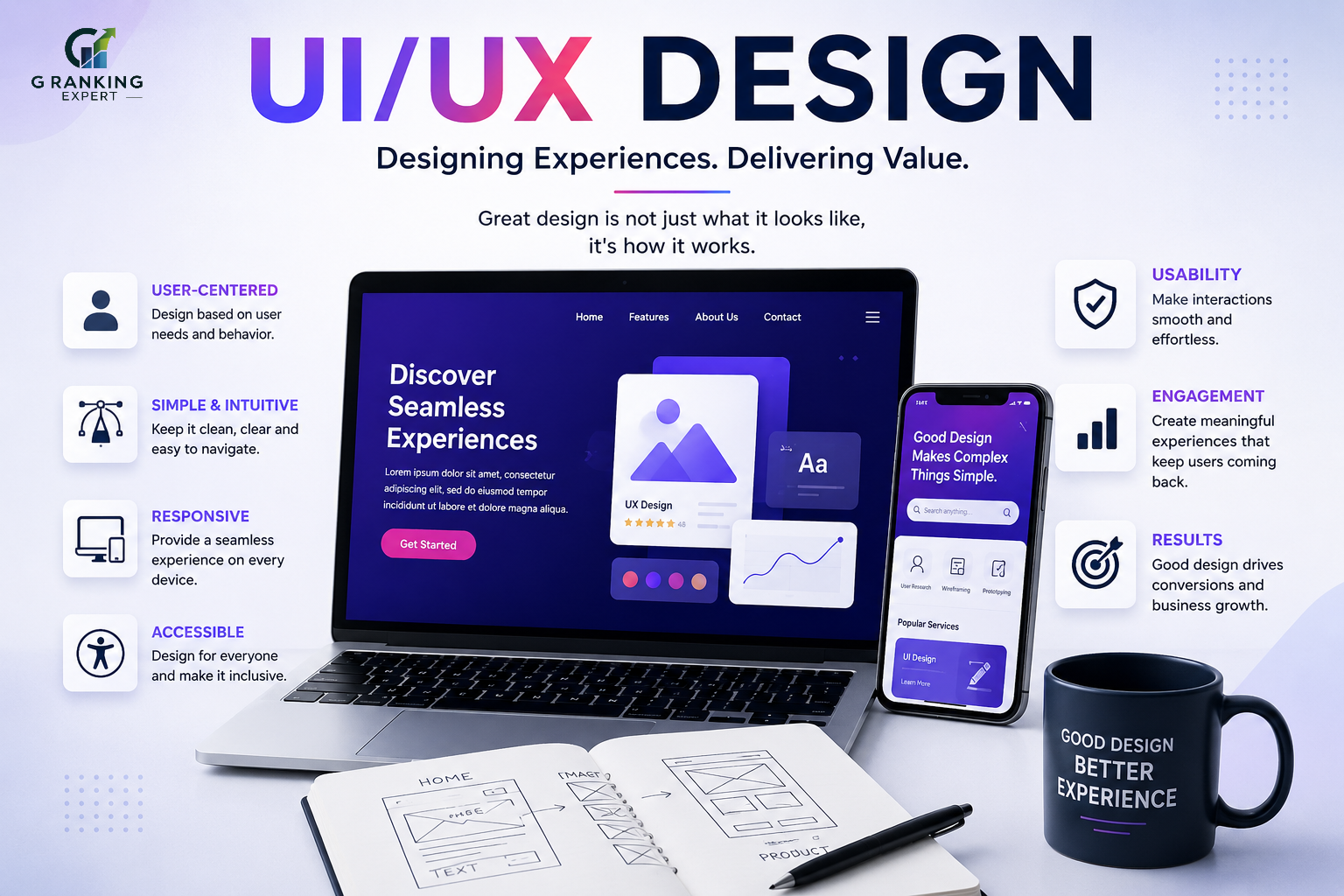
In the digital age, users expect websites and applications to be fast, intuitive, and visually appealing. A product may offer excellent features, but without a smooth user experience, it can struggle to retain visitors. This is where UI/UX design becomes essential. It helps businesses create digital products that not only look professional but also provide meaningful and enjoyable experiences for users. Understanding UI and UX Design UI (User Interface) Design focuses on the visual elements of a product, including colors, typography, buttons, icons, and layouts. It determines how a website or application looks and feels. UX (User Experience) Design focuses on the overall journey of the user. It involves understanding user behavior, identifying pain points, and creating solutions that make interactions simple and efficient. While UI attracts users visually, UX ensures they enjoy using the product. Why UI/UX Design Matters A well-designed user experience can significantly impact a business. Users are more likely to trust and engage with a platform that is easy to navigate and visually appealing. Good UI/UX design reduces frustration, increases customer satisfaction, and encourages users to return. Businesses that invest in design often experience higher conversion rates, stronger customer loyalty, and a better brand reputation. In a competitive market, a superior user experience can become a major advantage. Essential Elements of Great Design Successful UI/UX design is built on simplicity, consistency, and usability. Navigation should be clear, content should be easy to understand, and every interaction should feel natural. Designers also focus on accessibility and responsiveness. A modern digital product must perform well across desktops, tablets, and smartphones while remaining accessible to users with different needs and abilities. The Growing Impact on Businesses Today, UI/UX design is more than a creative process—it is a business strategy. Companies use design to improve customer engagement, reduce support costs, and strengthen their digital presence. A positive user experience often leads to better customer retention and increased revenue. As users continue to demand seamless digital interactions, businesses that prioritize design are more likely to succeed in the long run. Conclusion UI/UX design plays a crucial role in shaping how users interact with digital products. It combines aesthetics with functionality to create experiences that are both engaging and effective. Whether for a website, mobile app, or software platform, investing in quality UI/UX design is an investment in customer satisfaction and business growth.

Corporate Website Design: The Digital Foundation of Business Success
Categories
Web Design

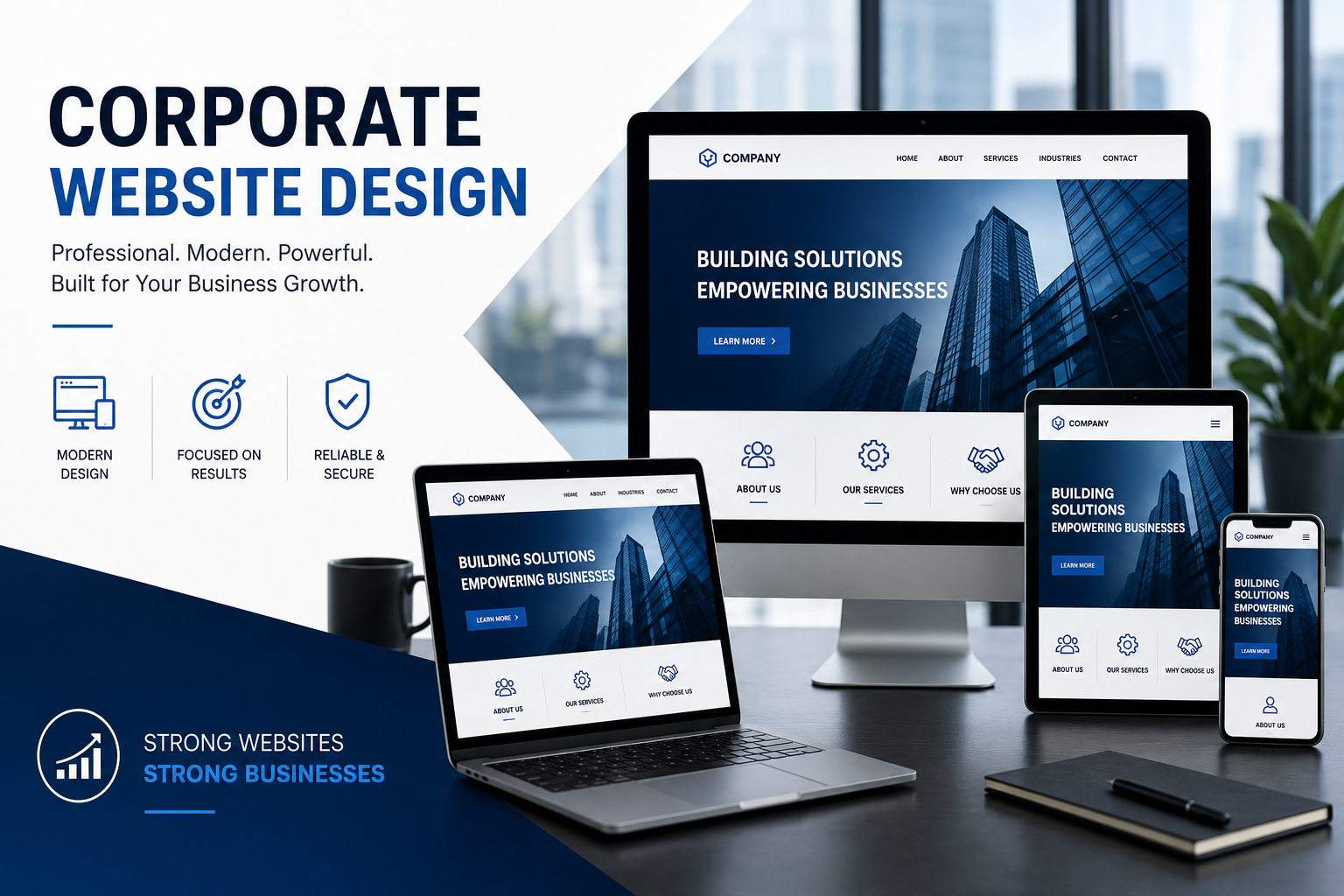
Corporate Website Design: The Digital Foundation of Business Success, the first point of contact for potential clients, and a powerful tool for building trust, credibility, and long-term business growth. A professionally designed corporate website communicates authority, strengthens brand identity, and transforms visitors into loyal customers. Why Corporate Website Design Matters Modern consumers judge a business within seconds of visiting its website. An outdated design, slow loading speed, or confusing navigation can drive potential customers away instantly. A well-crafted corporate website creates a strong first impression, demonstrates professionalism, and reassures visitors that they are dealing with a reliable organisation. A corporate website also serves as a central hub for showcasing products, services, company achievements, and industry expertise. It becomes a valuable asset that works around the clock to support sales, marketing, and customer engagement. Essential Elements of an Effective Corporate Website Successful corporate websites combine aesthetics with functionality. Clean layouts, intuitive navigation, responsive design, and fast performance are fundamental requirements. Visitors should be able to access important information quickly without frustration. Strong visual branding is equally important. Consistent use of colours, typography, imagery, and messaging helps establish a recognisable identity that strengthens brand recall. Every design element should reinforce the company’s values and professional image. The Role of User Experience in Corporate Success User experience plays a critical role in determining whether visitors stay on a website or leave. A seamless browsing experience encourages users to explore services, read company information, and take meaningful actions such as submitting inquiries or requesting consultations. Mobile responsiveness has become non-negotiable. With a significant portion of web traffic coming from smartphones and tablets, businesses must ensure their websites deliver exceptional performance across all devices and screen sizes. SEO and Performance Optimisation A visually appealing website has limited value if potential customers cannot find it. Search engine optimisation should be integrated into the design process from the beginning. Proper site architecture, optimised page speed, mobile-friendly design, and high-quality content contribute to stronger search engine visibility. Performance optimisation also enhances user satisfaction. Faster websites reduce bounce rates, improve engagement, and increase conversion opportunities. Businesses that invest in both design and technical excellence gain a substantial competitive advantage. Investing in Long-Term Growth Corporate website design is not merely a design project; it is a strategic business investment. A modern, secure, and professionally developed website strengthens credibility, generates leads, and supports long-term expansion. As digital competition continues to intensify, companies that prioritise exceptional web design position themselves for sustained success and market leadership. A powerful corporate website tells a compelling brand story, builds meaningful customer relationships, and creates opportunities that extend far beyond the digital world. In an era where online presence defines business reputation, professional website design remains one of the most valuable investments a company can make.

Digital Marketing – The Smart Way to Grow a Business Online
Categories
Digital Marketing

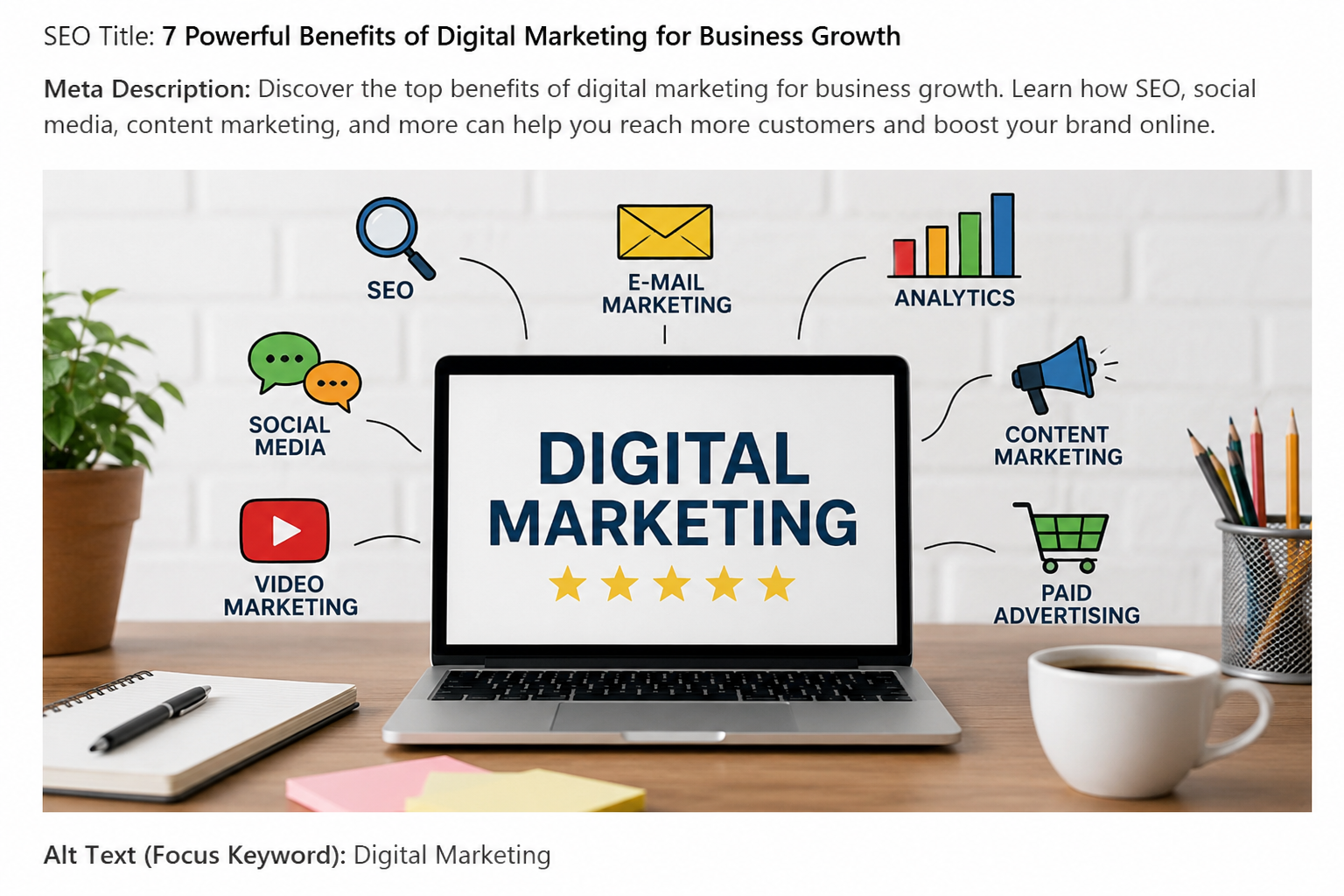
What is Digital Marketing? Digital marketing is the way businesses promote their products or services on the internet. Nowadays, every person uses a phone, a laptop and social media every day. So businesses now focus more on marketing instead of just using traditional advertising like newspapers or banners. Digital marketing helps businesses like Digital Marketing connect with people online. Whether it is a local shop or a large company, every business wants more customers and better visibility. This is where Digital Marketing becomes important. It is not about selling products. It is also about building trust, creating awareness and staying connected with customers regularly. Digital Marketing is about building a relationship with customers. Why Digital Marketing is Important The online world is growing fast. People search on Google before buying something. They check reviews, visit media pages and compare services online. If a business is not active online, many potential customers may never find it. This is why Digital Marketing is important. Digital Marketing helps businesses like Digital Marketing reach the audience at the right time. It is also more affordable compared to traditional marketing methods. Even small businesses with budgets can grow online with proper Digital Marketing strategies. One of the things about Digital Marketing is that results can be tracked easily. Businesses can see how many people visited their website, clicked on ads or interacted with media posts. This helps them improve their Digital Marketing plans over time. Different Types of Digital Marketing Search Engine Optimisation (SEO) SEO helps websites appear on search engines like Google. When someone searches for a product or service, SEO helps the website rank higher in search results. A better ranking usually means more website visitors and more potential customers for Digital Marketing. Social Media Marketing (SMM) Social media platforms like Instagram, Facebook and LinkedIn are very popular today. Businesses use these platforms to share content, connect with audiences and promote products. Good Social Media Marketing helps create brand awareness and customer engagement for Digital Marketing. Content Marketing Content Marketing focuses on sharing interesting information. Blogs, videos, articles and infographics are examples. Helpful content builds trust. Keeps customers interested in a brand like Digital Marketing. Email Marketing Email Marketing is still one of the most effective ways to communicate with customers. Businesses send updates, offers and news directly to people through emails. It helps maintain long-term relationships with customers for Digital Marketing. Paid Advertising Paid ads help businesses like Digital Marketing reach people quickly. Platforms like Google Ads and Facebook Ads allow businesses to target audiences based on interests, location and behaviour. Benefits of Digital Marketing Helps reach an audience More affordable than marketing Builds brand awareness Increases website traffic Improves customer communication Provides results Helps businesses grow online Because everything is online, businesses like Digital Marketing can connect with customers from different cities or even different countries without opening physical stores everywhere. The Future of Digital Marketing Digital Marketing is changing every year. New trends, technologies and social media platforms continue to grow. Video Marketing, Influencer Marketing and AI tools are becoming more popular. Businesses that stay updated with Digital Marketing trends usually perform well online. Customers now expect businesses like Digital Marketing to have an online presence. A professional website, social media pages and useful content all help create a better customer experience for Digital Marketing. Final Thoughts Digital Marketing is no longer optional for businesses like Digital Marketing. It has become a part of business growth in the modern world. Whether someone runs a startup, a local shop or a large company, Digital Marketing helps them connect with people and grow their brand online. With the strategy and consistent effort, Digital Marketing can help businesses like Digital Marketing build trust, attract customers and achieve long-term success. Digital Marketing is the key to growing a business online.

SEO – The Way to Grow Online
Categories
SEO

What is SEO? SEO stands for Search Engine Optimisation. At first, it sounds like something, but it is really very easy to understand. Search Engine Optimisation helps your website appear on search engines when people look for things online. For example, if someone searches for a bakery, a clothing shop or a digital marketing service search engines show a lot of results. Search Engine Optimisation helps your website appear in those results so that more people can find your business. Today almost everyone uses the internet before buying something or choosing a service. People search, compare and read before making decisions. That is why Search Engine Optimisation has become so important for businesses of all sizes. Why Search Engine Optimisation Matters Imagine opening a shop in a place where nobody walks by. A website without Search Engine Optimisation can feel the way. You may have products or services but if people cannot find your website, it becomes difficult to grow online. Good Search Engine Optimization helps bring visitors to your website. Unlike paid ads, Search Engine Optimisation allows people to discover you through search results. Some of the benefits of Search Engine Optimisation are: More people are visiting your website online visibility More trust from customers Higher chances of getting leads and sales Long-term online growth People usually trust websites that appear near the top of search results. Strong Search Engine Optimisation helps build that trust over time. How Search Engine Optimisation Works Search engines want to show users the most helpful results. They check things before ranking a website. Some important Search Engine Optimisation factors include: Fast website speed Mobile-friendly design content Proper keyword usage Easy website navigation Backlinks from trusted websites If your website gives useful information and a smooth experience, search engines are more likely to rank it higher. Different Types of Search Engine Optimisation On-Page Search Engine Optimisation On-page Search Engine Optimisation focuses on the content inside your website. This includes using keywords, writing clear headings and creating useful articles or pages. Good content is one of the important parts of Search Engine Optimisation because people visit websites to find answers and information. Off-Page Search Engine Optimisation Off-page Search Engine Optimisation happens outside the website. One major part of this is backlinks. When other websites mention or link to your website, search engines see it as a signal. Technical Search Engine Optimisation Technical Search Engine Optimisation focuses on the backend side of a website. It helps search engines read and understand your pages properly. A clean and fast website usually performs better in search results. Content and Search Engine Optimisation Go Together Search Engine Optimisation is not about keywords anymore. Search engines now care more about user experience and valuable content. People do not want content that feels robotic or stuffed with repeated words. They want information that is easy to understand and actually helpful. That is why human-focused content performs better today. Blogs, guides and articles that answer questions naturally often attract readers and better rankings. Search Engine Optimisation Takes Patience One thing many people forget is that Search Engine Optimization takes time. Results do not happen overnight. Building rankings is a slow process, but the long-term benefits are worth it. With updates, quality content and proper optimization websites can grow steadily over time. Final Thoughts Search Engine Optimization is one of the ways to build a strong online presence. It helps businesses connect with the audience and grow naturally without depending only on advertisements. In today’s world Search Engine Optimisation is no longer optional. It has become a part of online success for businesses, creators and brands.

Enterprise Content Management System: A Complete Guide for Growing Digital Businesses
Categories
Marketing, Web Design

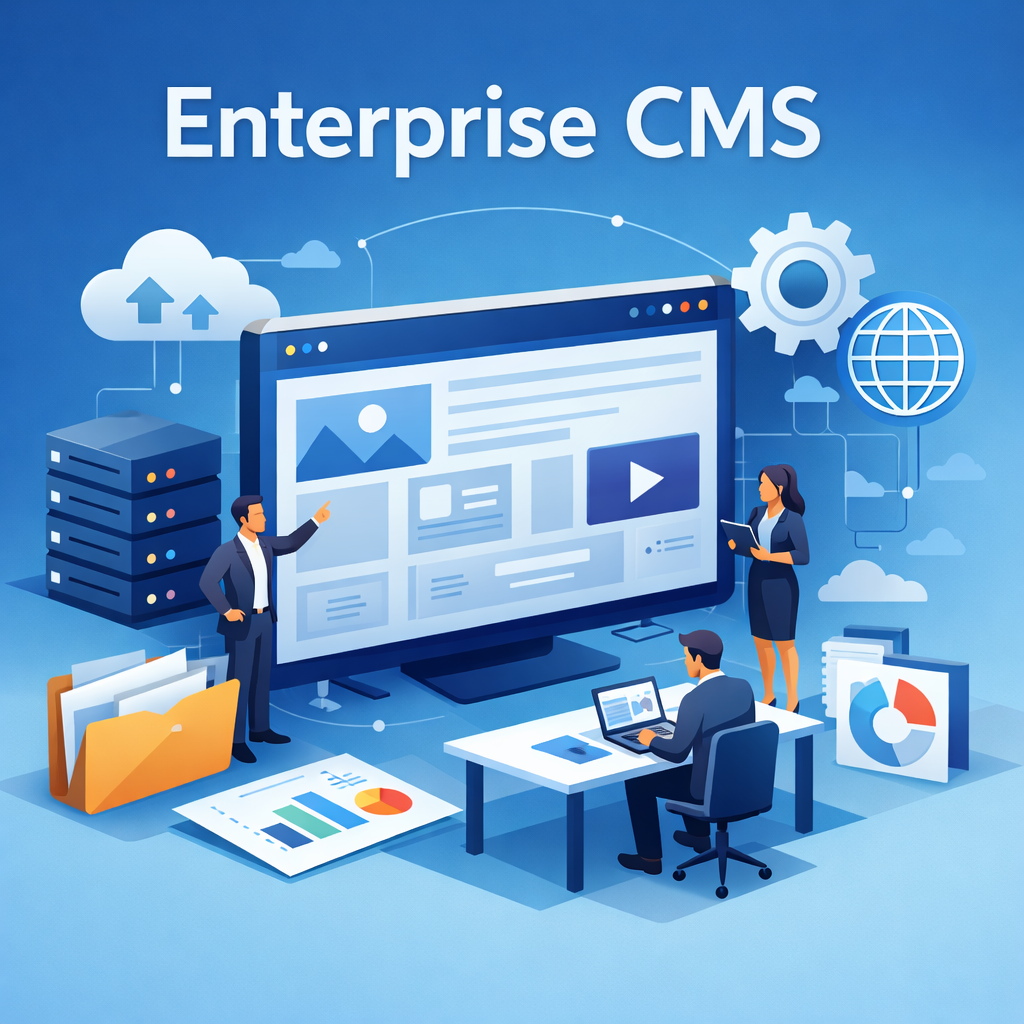
In today’s world, businesses have to deal with a lot of content on their websites, mobile apps, customer portals and marketing platforms. To handle all this content, you need something more than just a simple website builder. That is where an Enterprise Content Management System comes in. An Enterprise Content Management System helps big companies manage organize, publish and scale their content across many channels. It has features like workflow management, security, scalability and integration with other business tools. In this guide, we will explore what an Enterprise Content Management System is, why businesses need it and how it can change the way they manage content. What Is an Enterprise Content Management System? An Enterprise Content Management System is a platform that helps companies manage a lot of digital content across many websites and digital channels. Unlike content management systems that focus on blogging or small websites, an Enterprise Content Management System is built for big companies that need: Advanced security Multi-user collaboration Workflow management Integration with business tools Scalability for large traffic and content Companies with global websites, many departments, and complex digital strategies often rely on Enterprise Content Management Systems to stay consistent and efficient. Key Features of an Enterprise Content Management System An Enterprise Content Management System offers features that help companies manage digital content on a large scale. 1. Scalable Content Management One of the advantages of an Enterprise Content Management System is that it can scale. Businesses can manage thousands of pages, blogs, media files and product content without any performance issues. As the company grows, the Enterprise Content Management System grows with it. 2. Multi-User Collaboration Big teams often work on content together. An Enterprise Content Management System allows many users to collaborate efficiently through: Role-based access Editorial workflows Content approval systems Version control This ensures collaboration between marketing teams, developers and content creators. 3. Advanced Security Security is very important for Enterprise websites. An Enterprise Content Management System includes security features like: Role-based permissions Data encryption Compliance management Secure hosting environments These features help protect sensitive company data and customer information. 4. Omnichannel Content Delivery Modern customers interact with brands through channels. An Enterprise Content Management System enables businesses to deliver content across: Websites Mobile applications E-commerce platforms Customer portals Digital kiosks This ensures a brand experience everywhere. 5. Integration With Business Tools An Enterprise Content Management System can integrate with business systems like: CRM platforms Marketing automation tools Analytics platforms E-commerce systems This creates a connected digital ecosystem that improves business efficiency. Benefits of Using an Enterprise Content Management System Using an Enterprise Content Management System can provide benefits for big companies. Improved Content Governance An Enterprise Content Management System helps companies maintain control over a lot of content. With workflows and approval processes companies can ensure consistent and high-quality publishing. Faster Content Publishing Marketing teams can quickly create, update and publish content without relying on developers. This speeds up campaigns and content updates. Better Team Collaboration With built-in workflow management, teams can work together smoothly while maintaining content review and approval processes. Consistent Brand Experience An Enterprise Content Management System helps businesses maintain a brand voice and design across all digital channels. Future-Ready Digital Infrastructure As digital demands grow, businesses need systems. An Enterprise Content Management System supports expansion, new technologies and digital transformation initiatives. Enterprise Content Management System vs Traditional Content Management System Many businesses start with a Content Management System, but later upgrade to an Enterprise Content Management System as their needs grow. Feature Traditional Content Management System Enterprise Content Management System Content Scale Small to Large-scale Security Basic Advanced enterprise security User Management Limited Role-based access Workflow Minimal Advanced workflow automation Integration Limited Extensive integrations This is why big companies prefer Enterprise Content Management Systems for complex digital environments. How to Choose the Right Enterprise Content Management System Choosing the Enterprise Content Management System requires careful evaluation. Here are some key factors to consider: Scalability Ensure the system can handle increasing traffic, content and users without performance issues. Integration Capabilities The Enterprise Content Management System should easily integrate with existing business tools and software. Security and Compliance Look for features that support data protection, compliance standards and enterprise-grade security. Customization Flexibility A good Enterprise Content Management System should allow customisation to match your company’s workflow and digital strategy. User Experience The platform should be easy for both technical and non-technical users to operate. Future Trends in Enterprise Content Management Systems The future of Enterprise Content Management Systems is changing rapidly as businesses demand flexible and scalable solutions. Some key trends include: Headless Content Management System architecture AI-powered content management Personalised content delivery Cloud-based Enterprise Content Management System solutions Automation-driven workflows These innovations are helping companies manage experiences more efficiently than ever before. Conclusion An Enterprise Content Management System is more than a content management tool. It is a digital platform that enables companies to manage content, collaborate across teams and deliver consistent experiences across many channels. As businesses expand their presence, investing in a robust Enterprise Content Management System becomes crucial for long-term growth. With scalability, security, and integration capabilities, an Enterprise Content Management System can help companies streamline operations and stay competitive in the digital landscape.

Custom Web Development: A Smart Choice for Modern Businesses
Categories
Web Design, Marketing

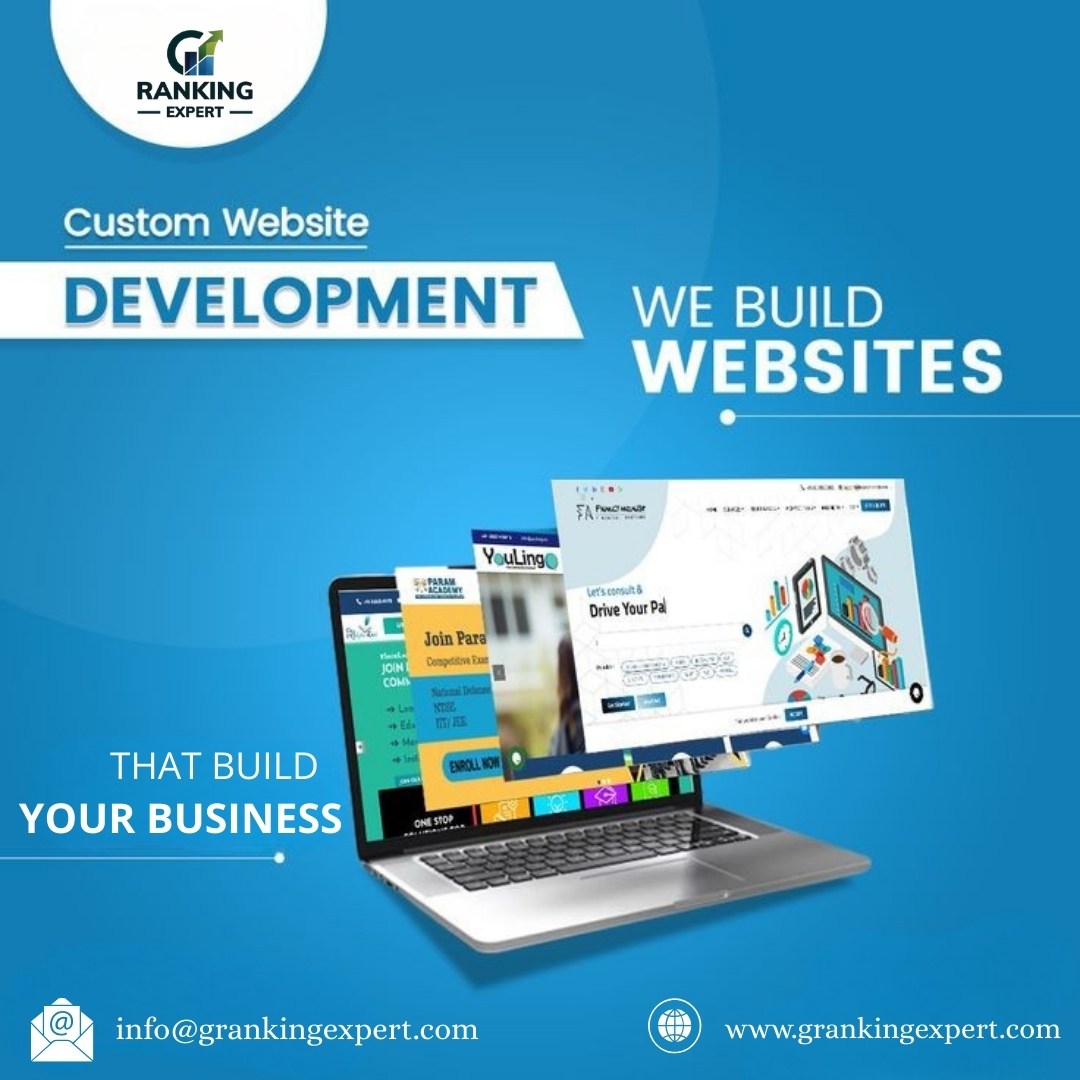
In today’s world, a website is often the first place where customers interact with a business. Because of this, companies can’t just use templates or generic website builders. They need websites that truly represent their brand and meet their needs. That’s where Custom Web Development comes in. Custom Web Development is about building a website from scratch. It helps businesses create a design, add special features and make sure the site works exactly the way they want. Whether you run a startup, an eCommerce brand or a large organization a custom-built website can help you create a stronger online presence. What is Custom Web Development? Custom Web Development is the process of designing and developing a website specifically for a business. Developers build the website’s structure, design and functionality according to the company’s goals. This approach gives businesses control over their website. Some common elements of custom development include: Custom website design Front-end and back-end development Database management API integrations Performance optimization Why Businesses Prefer Custom Web Development Many businesses choose Custom Web Development because it offers flexibility and long-term value. A built website allows businesses to create a design that truly reflects their brand identity. This makes the website look more professional and helps it stand out from competitors. A custom website also performs better. It’s built with the necessary features, which means less code, faster loading times and a smoother user experience. It’s easier to add new features or integrations as the business grows. Improved Security is another advantage. Since the website is developed for the business, developers can implement stronger security measures and reduce vulnerabilities. Key Features of Custom Web Development When businesses invest in Custom Web Development services, they gain access to features that improve both functionality and user experience. Website Design: The website adapts smoothly to different screen sizes. Custom Content Management System: Businesses can easily update content management pages and publish information. Third-Party Integrations: A custom website can connect with tools such as payment gateways, CRM systems and marketing software. Custom Web Development vs Template-Based Websites Businesses often compare Custom Web Development with template-based website solutions. Template websites are quick to launch and cheaper. They have limitations in design, flexibility and scalability. Custom websites take time to develop but provide greater control, better performance and the ability to add advanced features. For businesses that rely heavily on their presence, custom development often becomes the better long-term investment. Technologies Used in Custom Web Development Developers use technologies to build high-performing custom websites. Some used technologies include: HTML, CSS and JavaScript React.js and Angular Node.js PHP and Laravel Python and Django MySQL and MongoDB How Custom Web Development Supports SEO Custom Web Development helps with search engine optimisation. Developers can design the website with SEO practices in mind, including clean code, fast loading speed and mobile-friendly design. When Should You Choose Custom Web Development? Custom development is useful for businesses that need more than a basic website. You should consider Custom Web Development if your business requires features, such as a custom design or integration with other tools. Choosing the Right Custom Web Development Partner Selecting the right development team is crucial. Businesses should review the company’s experience, portfolio and technical expertise. A reliable development partner will build the website. Provide support and maintenance after launch. A well-designed website can make a big difference in how customers perceive a brand. Custom Web Development gives businesses the opportunity to create scalable and optimised websites. While template-based websites may work for projects, custom-built websites offer greater flexibility, better performance and stronger security. For businesses that want to build an online presence and grow online investing in Custom Web Development is often the right move. Custom Web Development provides long-term value. Helps businesses achieve their goals. Businesses should consider Custom Web Development for their success.

Amazon SEO Tips for E-commerce Brands to Improve Product Visibility
Categories
SEO, Marketing

Amazon SEO Tips are important because Amazon is now one of the places where people search for products.. Many shoppers start looking for products on Amazon, not on Google. Because of this, e-commerce brands need to make sure their product listings on Amazon are good. This helps them get visitors and stay competitive. When people search on Google, Amazon product pages often show up in the results. So if your Amazon listings are well-optimised, your products can be seen by people. Amazon has its way of ranking products. Things like product titles, bullet points, images and keywords in the backend are important. They help decide where your product appears in search results. When your listing is optimized it makes it easier for customers to find what they are looking for. This improves their shopping experience. Here are some important Amazon SEO tips for e-commerce brands: 1. Amazon SEO Tips: Start With Smart Keyword Research Keyword research is key to Amazon SEO. Before you create or optimise a product listing, you need to know how shoppers search for products like yours. Start by finding keywords that customers might type into Amazon when looking for your product. You can do this by: Looking at competitor product listings Using keyword research tools Checking Amazon search suggestions Amazon’s autocomplete feature is helpful. It shows real search queries from shoppers. For example, if you type “earrings” into Amazon, you will see suggestions like: earrings stud earrings dangling earrings hoop earrings These suggestions show what shoppers are searching for and what product attributes matter most. When optimising listings for a brand like Claire’s, understanding these search patterns helps ensure that the listing matches the user’s search intent. If shoppers frequently search for metal types or styles, such as studs or dangling earrings, those details should be included in your product listing. 2. Optimise Your Product Titles Your product title is one of the important ranking factors in Amazon SEO. It is often the thing shoppers see in search results. A strong product title should include information while still being easy to read. Important elements to include: Brand Name: Helps shoppers quickly recognise your product. Key Features: Include attributes such as colour, material, size or style. Relevant Keywords: Use the terms customers actually search for. Amazon allows up to 200 characters for product titles, so use the space strategically. However, avoid keyword stuffing or making the title difficult to read. A good approach is to structure the title to product packaging you would see in a physical store. For example, a vague title like: Butterfly Necklace A more optimised version would be: Claire’s Dainty Gold-Tone 3D Butterfly 16″ Pendant Necklace This version clearly communicates the brand, style, material and size, making it more informative for both shoppers and Amazon’s search algorithm. Consistency across all product listings within a brand is also important. If some listings contain titles and others do not, it can weaken your brand presence and reduce search performance. 3. Use High-Quality Product Images and Video Images play a role in both search performance and conversions on Amazon. Shoppers often rely on visuals to decide whether a product meets their needs, so your listing should include high-quality images that clearly showcase the product. Successful listings include at least three to four images, such as: A clear main product image Close-up shots highlighting details Different angles of the product Lifestyle images showing the product in use Lifestyle images are particularly powerful because they help customers imagine how the product fits into their lives. For example, instead of only showing earrings on a plain background, you might include an image of someone wearing them in a real setting. You should also follow Amazon’s image guidelines. Ensure that images are high resolution and properly formatted. Adding alt text to images is another practice. Alt text improves accessibility. Gives you another opportunity to include relevant keywords. For example: “Young girl at Claire’s using ear care solution.” This description clearly explains the image while naturally including product keywords. Video content is also becoming more common in Amazon listings. Product videos allow shoppers to see the product in action, which can increase engagement and conversion rates. When creating product videos, focus on: lighting and good visual quality Demonstrating how the product is used Highlighting key features and benefits Avoid adding unnecessary promotional text or flashy elements. Instead, keep the focus on showing the product in real-life situations. 4. Improve Bullet Points and Product Descriptions Once a shopper clicks on your product, the next thing they will notice is the bullet point section. These bullet points should clearly explain the product’s features, benefits and specifications. Amazon allows up to five bullet points. Each one should be concise and easy to scan. Typical bullet points may include: Materials or ingredients Product dimensions Key features Care instructions Usage benefits For example, the first bullet point should usually include the important product information, such as ingredients or materials. The following bullets can expand on the benefits. Tell a short story about how the product improves the customer’s experience. For example: “Heal your piercings just in time for your next event.” This type of messaging helps customers understand how the product fits into their lives, making it easier for them to decide to purchase. Always keep users in mind. Many shoppers browse Amazon on their phones. Important information should appear early and be easy to read. 5. Use Backend Search Terms with  Amazon provides a section for backend search terms, sometimes called keywords. These keywords are not visible to shoppers. Help Amazon’s algorithm understand when to display your product in search results. Backend keywords are useful for including: Keyword variations Synonyms Abbreviations misspellings For example, if you sell products related to The Lord of the Rings, you might include: lotr lord of the Rings merchandise fantasy jewelry These variations help your product appear for more search queries without cluttering your visible listing. However, avoid repeating keywords that are already included in your product title or

B2B Social Media Marketing: How to Build a Winning Strategy That Drives Leads
Categories
Marketing, Digital Product, SEO

Most consumer brands have already mastered B2B social media marketing. Their feeds are full of polished videos, engaging posts, and targeted ads designed to capture attention. But many B2B companies are still lagging behind. Some treat social media as just another checkbox in their marketing plan. Others post occasionally without a clear strategy. And some avoid it altogether. That’s a missed opportunity. Your buyers are already on these platforms. They scroll LinkedIn between meetings, watch educational videos on YouTube, and even discover industry insights on TikTok. The reality is simple: B2B social media works differently from consumer marketing. It’s less about selling directly and more about providing value, building credibility, and staying visible during long buying cycles. This guide will help you understand the best platforms, how to build an effective strategy, and the mistakes you should avoid. Key Takeaways Many B2B brands struggle on social media because they focus on broadcasting instead of delivering value. LinkedIn remains the most powerful platform for B2B, but YouTube, X, TikTok, and Instagram can also be effective. Educational content performs better than promotional posts in B2B social media marketing. A strong strategy should be built around buyer personas, funnel stages, and platform-specific content. Avoid focusing on vanity metrics like impressions. Instead, track meaningful actions such as clicks, leads, or demo sign-ups. Why B2B Social Media Is Still Underrated Many B2B companies still treat social media as an afterthought. They post a few updates, share an occasional blog article, and assume that’s enough. But social media has evolved. Today it plays an important role in lead generation, brand trust, and even sales influence. Your potential customers are already active on these platforms: LinkedIn for professional networking and industry insights YouTube for tutorials and product education X (Twitter) for real-time conversations and thought leadership TikTok for short educational content in certain niches Social media is no longer just a top-of-funnel channel. It helps influence buying decisions throughout the entire customer journey. That’s why many successful B2B brands now treat social media as a core marketing channel, alongside SEO, email marketing, and paid advertising. And since many competitors still underestimate it, there’s a real opportunity to stand out. Best Social Media Platforms for B2B Marketing Not every social network will deliver the same results. The key is to focus on platforms where your audience is already active. Here are the most effective ones for B2B marketing. LinkedIn LinkedIn remains the most powerful social platform for B2B marketers. In fact, 97% of B2B marketers use LinkedIn as part of their content marketing strategy. Why is it so effective? LinkedIn is built around professional relationships. People visit the platform to learn, network, and discover industry insights. That means your content reaches an audience already interested in business topics. Successful LinkedIn strategies often include: Thought leadership posts Industry insights Case studies Educational content Employee advocacy posts For many B2B companies, LinkedIn is the primary platform for generating qualified leads. X (Twitter) X can still be valuable for B2B companies, especially in industries like technology, SaaS, and marketing. It works best for real-time conversations and industry commentary. Short threads, opinions, and quick insights can build credibility quickly if they provide value. However, X typically works better for brand visibility and engagement rather than direct conversions. Think of it as a place to start conversations rather than close deals. YouTube YouTube is one of the most powerful long-term platforms for B2B marketing. Unlike other social media posts that disappear quickly, YouTube videos can generate traffic for years. Popular B2B video formats include: Product demonstrations Tutorials and how-to videos Customer success stories Industry explainers Since YouTube is owned by Google, videos can also appear in search results, strengthening your overall SEO strategy. TikTok and Instagram Many B2B companies ignore these platforms, but they can be surprisingly effective. Short-form video is ideal for: Simplifying complex ideas Showing behind-the-scenes moments Highlighting company culture Sharing quick educational insights The key is authenticity. Instead of acting like a corporate brand, companies that succeed on these platforms show the human side of their business. How B2B Social Media Should Work Differently One of the biggest mistakes B2B brands make is treating social media like a digital brochure. Their feeds are filled with product announcements and promotional posts. But that’s not why people scroll social media. Your audience is looking for solutions, insights, and useful information. When your content helps solve real problems, you naturally build trust with potential buyers. And trust is essential in B2B marketing. Instead of pushing products, focus on: Educational posts Industry analysis Practical tips Thought leadership When people see you as a helpful expert rather than a salesperson, they are far more likely to remember your brand when they need a solution. How to Build a B2B Social Media Strategy A successful strategy isn’t about posting constantly. It’s about posting with purpose. Here’s how to create a strategy that drives real results. Understand Your Customer Personas Before creating content, you need to understand who you are speaking to. Different audiences care about different things. For example: CMOs often want strategic insights and industry trends. Sales managers look for practical tactics and measurable results. Founders may focus on big-picture thinking or leadership insights. Segment your audience and identify: What problems do they face Which platforms do they use What type of content do they prefer This allows you to create content that truly resonates. Set Clear Goals and KPIs Without clear goals, it’s easy to chase the wrong metrics. Different objectives require different measurements. For example: Brand awareness Reach Impressions Follower growth Engagement Comments Shares Saves Lead generation Click-through rates Landing page visits Demo sign-ups Avoid focusing only on vanity metrics. Instead, track the numbers that actually impact business growth. Create a Content Marketing Calendar A structured content calendar keeps your strategy organised and consistent. It should also align with the marketing funnel. Top of Funnel (Awareness) Educational content such as tips, industry statistics, or quick insights. Middle of Funnel (Consideration) Case studies,

Calendar

July 2026
M T W T F S S
 12345
6789101112
13141516171819
20212223242526
2728293031  

Categories