
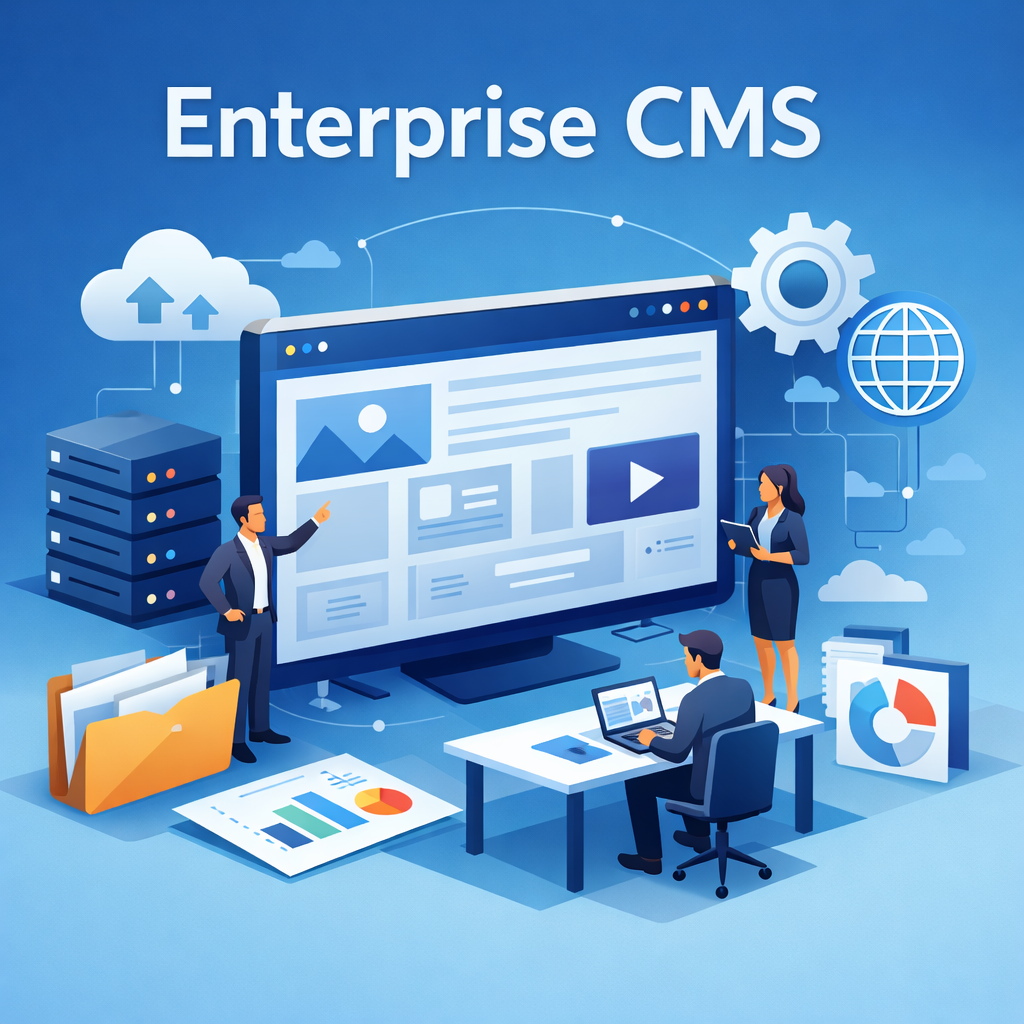
Enterprise Content Management System: A Complete Guide for Growing Digital Businesses
In today’s world, businesses have to deal with a lot of content on their websites, mobile apps, customer portals and marketing platforms. To handle all this content, you need something more than just a simple website builder. That is where an Enterprise Content Management System comes in. An Enterprise Content Management System helps big companies manage organize, publish and scale their content across many channels. It has features like workflow management, security, scalability and integration with other business tools. In this guide, we will explore what an Enterprise Content Management System is, why businesses need it and how it can change the way they manage content. What Is an Enterprise Content Management System? An Enterprise Content Management System is a platform that helps companies manage a lot of digital content across many websites and digital channels. Unlike content management systems that focus on blogging or small websites, an Enterprise Content Management System is built for big companies that need: Advanced security Multi-user collaboration Workflow management Integration with business tools Scalability for large traffic and content Companies with global websites, many departments, and complex digital strategies often rely on Enterprise Content Management Systems to stay consistent and efficient. Key Features of an Enterprise Content Management System An Enterprise Content Management System offers features that help companies manage digital content on a large scale. 1. Scalable Content Management One of the advantages of an Enterprise Content Management System is that it can scale. Businesses can manage thousands of pages, blogs, media files and product content without any performance issues. As the company grows, the Enterprise Content Management System grows with it. 2. Multi-User Collaboration Big teams often work on content together. An Enterprise Content Management System allows many users to collaborate efficiently through: Role-based access Editorial workflows Content approval systems Version control This ensures collaboration between marketing teams, developers and content creators. 3. Advanced Security Security is very important for Enterprise websites. An Enterprise Content Management System includes security features like: Role-based permissions Data encryption Compliance management Secure hosting environments These features help protect sensitive company data and customer information. 4. Omnichannel Content Delivery Modern customers interact with brands through channels. An Enterprise Content Management System enables businesses to deliver content across: Websites Mobile applications E-commerce platforms Customer portals Digital kiosks This ensures a brand experience everywhere. 5. Integration With Business Tools An Enterprise Content Management System can integrate with business systems like: CRM platforms Marketing automation tools Analytics platforms E-commerce systems This creates a connected digital ecosystem that improves business efficiency. Benefits of Using an Enterprise Content Management System Using an Enterprise Content Management System can provide benefits for big companies. Improved Content Governance An Enterprise Content Management System helps companies maintain control over a lot of content. With workflows and approval processes companies can ensure consistent and high-quality publishing. Faster Content Publishing Marketing teams can quickly create, update and publish content without relying on developers. This speeds up campaigns and content updates. Better Team Collaboration With built-in workflow management, teams can work together smoothly while maintaining content review and approval processes. Consistent Brand Experience An Enterprise Content Management System helps businesses maintain a brand voice and design across all digital channels. Future-Ready Digital Infrastructure As digital demands grow, businesses need systems. An Enterprise Content Management System supports expansion, new technologies and digital transformation initiatives. Enterprise Content Management System vs Traditional Content Management System Many businesses start with a Content Management System, but later upgrade to an Enterprise Content Management System as their needs grow. Feature Traditional Content Management System Enterprise Content Management System Content Scale Small to Large-scale Security Basic Advanced enterprise security User Management Limited Role-based access Workflow Minimal Advanced workflow automation Integration Limited Extensive integrations This is why big companies prefer Enterprise Content Management Systems for complex digital environments. How to Choose the Right Enterprise Content Management System Choosing the Enterprise Content Management System requires careful evaluation. Here are some key factors to consider: Scalability Ensure the system can handle increasing traffic, content and users without performance issues. Integration Capabilities The Enterprise Content Management System should easily integrate with existing business tools and software. Security and Compliance Look for features that support data protection, compliance standards and enterprise-grade security. Customization Flexibility A good Enterprise Content Management System should allow customisation to match your company’s workflow and digital strategy. User Experience The platform should be easy for both technical and non-technical users to operate. Future Trends in Enterprise Content Management Systems The future of Enterprise Content Management Systems is changing rapidly as businesses demand flexible and scalable solutions. Some key trends include: Headless Content Management System architecture AI-powered content management Personalised content delivery Cloud-based Enterprise Content Management System solutions Automation-driven workflows These innovations are helping companies manage experiences more efficiently than ever before. Conclusion An Enterprise Content Management System is more than a content management tool. It is a digital platform that enables companies to manage content, collaborate across teams and deliver consistent experiences across many channels. As businesses expand their presence, investing in a robust Enterprise Content Management System becomes crucial for long-term growth. With scalability, security, and integration capabilities, an Enterprise Content Management System can help companies streamline operations and stay competitive in the digital landscape.






Recent Comments